Verified, not assumed.

Anyone can hang a certificate in the lobby. What matters is whether the record still exists when someone asks for it two years later. Ours does.

100%

Units electrically verified before shipment

2class

IPC/WHMA-A-620 build standard

9001

ISO quality management system

0skip

Sampling plans on electrical test

Inspection under microscope

Built to A-620 Class 2.

Class 2 governs strand damage, insulation clearance, crimp geometry, solder wicking, and shield termination — every failure mode that looks fine and isn't. It's the standard for hardware built for continued performance in service, and it's what the overwhelming majority of programs actually specify.

  • 01Operators certified to IPC/WHMA-A-620, currency tracked
  • 02Class 1 or Class 2 build to your flow-down (Class 2 default)
  • 03Hand soldering to IPC J-STD-001 practice
  • 04Stereo-microscope inspection of terminations and solder joints
  • 05Calibrated tooling with go/no-go crimp verification
  • 06Documented rework and repair procedure, or scrap. Never a quiet fix
How every unit is tested

Before it ships
ContinuityPoint-to-point verification of every conductor against the netlist, on every unit. Opens, shorts, miswires, and swapped pins are caught at the test fixture, not at your integration bench.
Dielectric withstandHipot at the voltage your application calls for: 600 V standard, higher on request, conductor to conductor and conductor to shield.
Insulation resistanceMegohm verification where the specification requires it, recorded per unit.
Crimp pull-forceDestructive pull testing to the terminal manufacturer's specification at setup, at operator change, and at defined intervals through the run. Values logged per lot.
Four-wire resistanceLow-resistance measurement on power and ground paths where voltage drop matters.
DimensionalOverall length, branch lengths, and break-out positions verified against the drawing on first article and at defined intervals.
FunctionalPowered or signal-level test to your acceptance test procedure, when you have one. We'll help you write one if you don't.
Contacts and terminals under lot control
Traceability isn't paperwork. It's the difference between a contained lot and a recall. Lot to reel
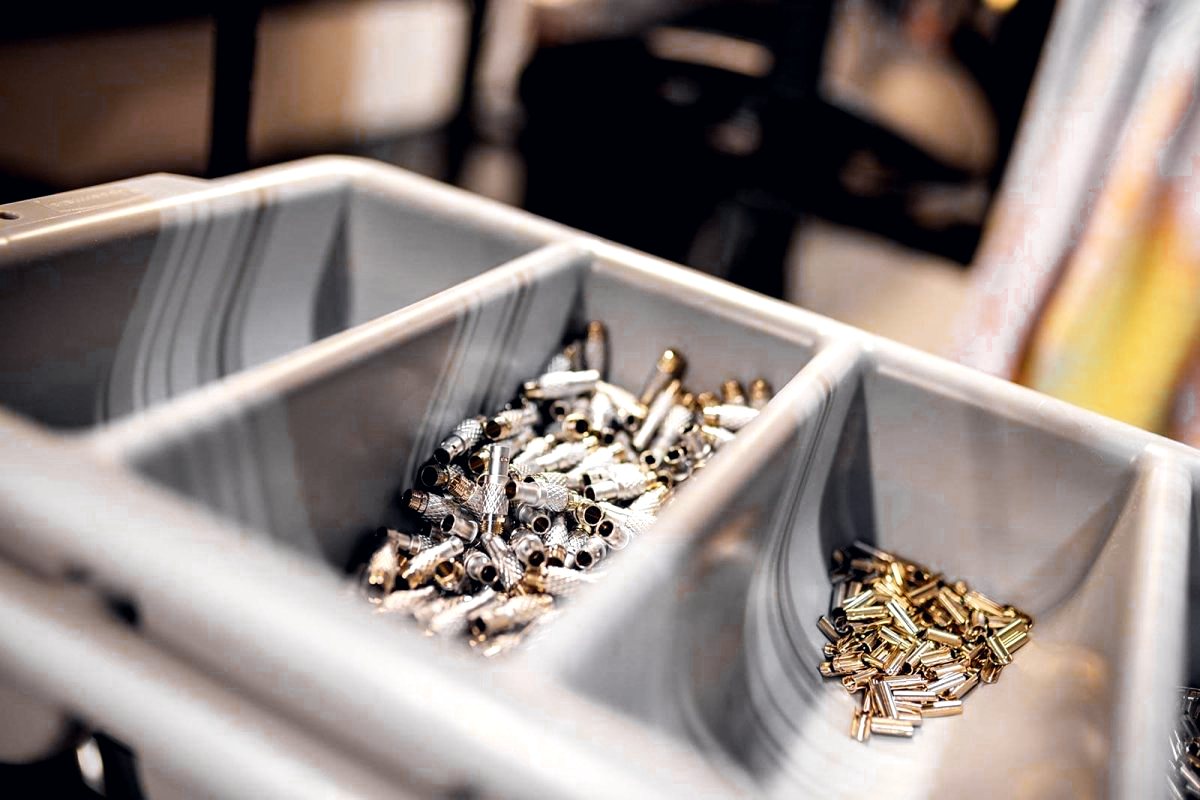
Terminals staged in bins

Every reel has a name.

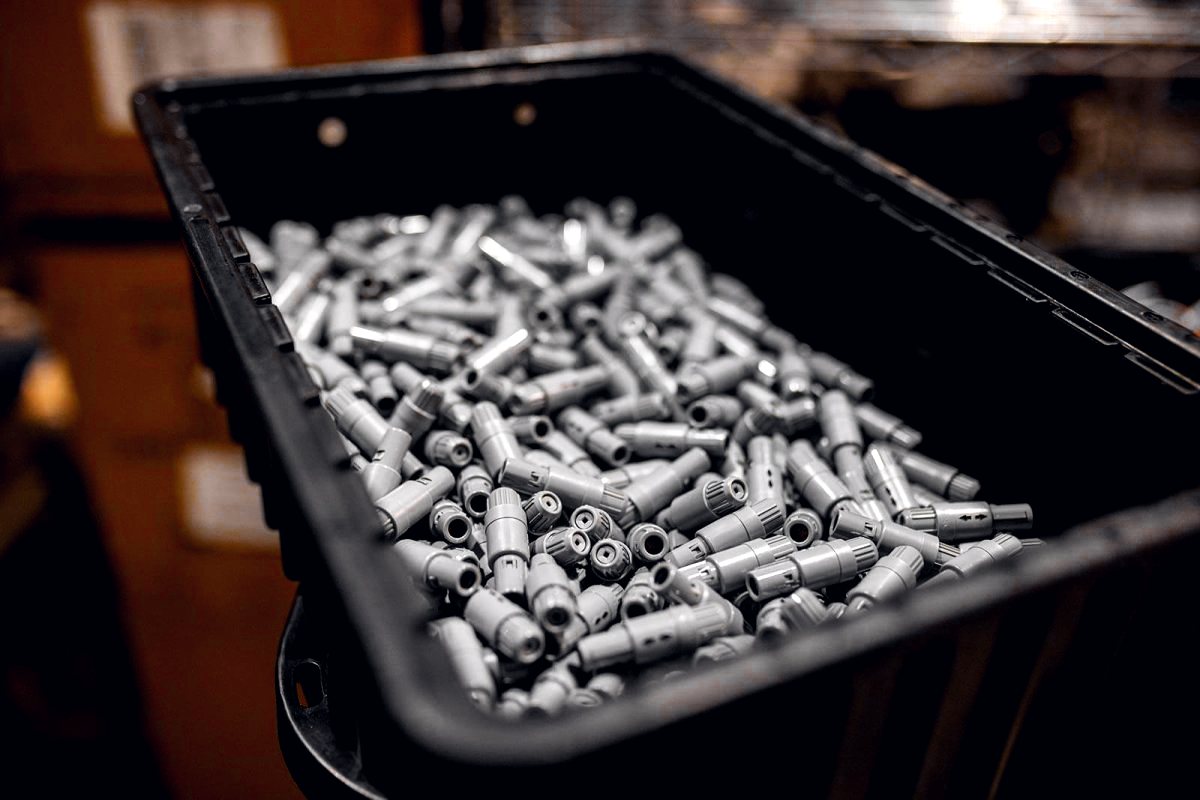
Wire, contacts, connectors, and sleeving are received against certification, held under lot control, and issued to a work order. When a supplier notifies us of a problem, we can tell you in an hour which of your units are affected, and which aren't.

  • 01Incoming inspection against certificate of conformance
  • 02Lot control from receipt through issue to work order
  • 03Serialization and unit-level traceability on request
  • 04Counterfeit-avoidance policy and franchised-distributor sourcing
  • 05Shelf-life control on adhesives, epoxies, and potting compounds
  • 06ESD-controlled handling where the assembly requires it

What ships with your build

Documentation package
01

First-article inspection report

Dimensional and functional verification against the controlled drawing, with every characteristic listed and recorded. AS9102 format on request.

02

Certificate of conformance

Signed statement that the lot was built to the revision on the purchase order, with the standards it was built to named.

03

Electrical test record

Continuity and hipot results, per unit, with the netlist tested against and the equipment used.

04

Material certifications

Supplier CofCs for wire, contacts, and connectors, traceable to the lot issued to your work order.

05

Build photographs

Documented images of the first article and of any feature where a picture settles an argument faster than a paragraph.

06

Revision record

The exact drawing revision built, and the ECO history behind it. Nothing changes silently between releases.

Change control

How revisions move
Step 01

Request

Any change, yours or ours, enters as a written ECO against a specific drawing revision. Verbal changes are not changes.

Step 02

Impact

We assess fit, function, tooling, material on hand, and units in process, and tell you what the change costs in dollars and days before you approve it.

Step 03

Approval

You sign. The drawing revision increments. The old revision is archived, not overwritten.

Step 04

Effectivity

The change takes effect at a stated serial or lot boundary, so you always know which revision is in which unit.

Send us a print.

Drawings, a bill of materials, or a photograph of the harness you're replacing. You'll have a manufacturable quote in two business days.

What to sendPrints, BOM, or photos
QuoteTwo business days
Volume1 to 10,000+
Location1220 N 80 E, Suite 13
Tooele, UT 84074
Direct(801) 472-2640